In the famous 1959 novel by E. R. Braithwaite, and the film made from it in the sixties, which proved even more successful—and from which the title of this essay is a slight variation—the extremely unruly students finally came to like their “Sir”, responding to his attempt to understand the psychology of adolescents, whom other teachers neither understood nor tried to do so.
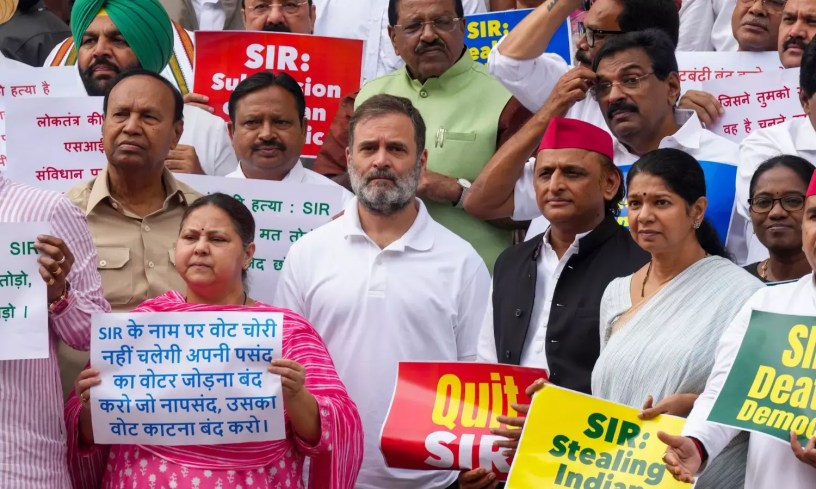
We cannot say with anything like the same certainty that the citizens of India harbour similar feelings for the SIR, or Special Intensive Revision of the electoral rolls being carried out by the Election Commission of India (ECI), which has kept the population on tenterhooks.
The exercise has turned out to be nothing short of a nightmare for large sections of voters whose names have not been included in the draft or final rolls and who are awaiting resolution of their cases at hearings before election officials. Adding to their agony is the opacity of the process by which names of voters who have been casting their votes for years, including in recent elections, have been deleted or placed under scrutiny.
An inclusive, correct and trustworthy electoral roll is the sine qua non for holding an impartial election in a democratic country. If elections have been conducted year after year — at least since 2002, the benchmark adopted by the EC — based on electoral rolls that were not correct, as the SIR is now finding “ineligible” voters in state after state, then it raises a disturbing question: were the elections held using such rolls truly reflective of the people’s will?
If it were a question of a few lakh voters—dead, untraceable, non-citizens, and so on—it would have been understandable. But here we are faced with deletions running into crores and spread across the length and breadth of the country. Available official data indicates crores of deletions in several larger states, while even smaller states have seen deletions running into tens of lakhs.
The story of West Bengal is perhaps the murkiest. More than 90 lakh names went through the various stages of the SIR process. Some 27 lakh voters were ultimately found ineligible and excluded. More than 22 lakh of them have filed appeals seeking reinstatement before tribunals set up following the Supreme Court’s direction to adjudicate such appeals.
The saddest part is that, when concerned citizens approach the judiciary over the ECI’s inept handling of the revision of the electoral rolls and what they regard as the wrongful disenfranchisement of voters, the matter’s progression through its labyrinthine corridors, despite its vital importance, is an embarrassment even for a snail. And, in between, comments would fly from the Bench that being debarred from voting in one election was not a big deal, and that, if found eligible, they could exercise their “constitutional right” at some other election in the future! The argument that an election based on a doubtful voters’ list vitiates the election itself did not cut any ice.
Now, months after the Assembly elections held last April, an overwhelming number of appeals remain pending. The latest figures submitted by the ECI to the Supreme Court show that as of mid-September, more than 37 lakh SIR-related appeals were still pending before the tribunals. The ECI itself has admitted that, at the present rate of disposal, clearing the backlog could take more than twelve years.
So, for the unfortunate victims of the SIR-induced purge, their chance to exercise their constitutional right to vote is likely to come in the distant future.
Once upon a time, the motto of the ECI used to be that “let there be a few aberrations in the voters’ list, but not a single eligible citizen should be denied their right to vote.” Now, like some of the unusual provisions of the Indian Nyaya Sanhita, where the accused must prove their innocence, adult citizens of this country are expected to prove to the ECI that they are eligible to vote! To make matters worse—and, in some cases, it is almost an utter joke—no single document appears to be regarded as sufficient proof of eligibility.
So far, the problem was confined largely to the harassment faced by voiceless citizens who found their names missing or under scrutiny. However, it has suddenly acquired a substantial political dimension after the Delhi SIR resulted in the deletion of the names of some prominent public figures—including a former Vice-President and one of the Election Commissioners from the draft rolls due to discrepancies in their voter records. ECI has clarified that these are draft-stage proceedings, and there is ample opportunity for names to be retained or restored after scrutiny.
Notwithstanding that, the sheer scale of the discrepancies is disturbing, and it reflects poorly on the efficiency of an institution that has long taken legitimate pride in conducting elections in the world’s largest democracy with remarkable competence.
So long as it was only a question of unnecessary hassle for some “unlucky” voters, the people at large did not fully understand the gravity of a citizen losing, even temporarily, the right to vote. However, recent investigations and reports published by the Indian Express have changed the perception almost overnight. The rot within the EC has now spilt over into the public domain, and the matter’s seriousness can no longer be ignored
Reports of important decisions allegedly being taken unilaterally by the CEC, without the concurrence of, or despite objections from, the other two Election Commissioners, raise serious concerns about the institution’s functioning. The latest announcement by the ECI that all decisions were unanimous and that the objections to some decisions raised by the two Election Commissioners were being taken care of will do little to reinforce the voters’ confidence in the impartiality of the ECI and allay the apprehension that the voters’ lists were not as pristine as they should be.
The ruling BJP has framed the entire episode as a natural process within a “democratically run” organisation, and has said the Opposition is making a mountain out of a molehill out of its frustration following electoral defeats. The Opposition, as expected, has seized the opportunity to corner the Government over yet another issue. It has demanded the resignation of the CEC, alleging that the SIR has resulted in mass disenfranchisement, accusing the ECI of “stealing votes”.
Even if the allegations against the ECI in general and the CEC in particular, that it was helping the ruling party in the elections, are not entirely true, the opacity surrounding the ECI’s decision-making, the use of software to scrutinise the electoral rolls, apparently without human oversight, and the internal disagreements among its members that have come into the open have certainly damaged the implicit trust that people had in the Election Commission of India. The root cause of the problem lies in how the CEC and the other Election Commissioners are selected.
The two-judge Bench of the Supreme Court, considering the Public Interest Litigations challenging the validity of the Chief Election Commissioner and Other Election Commissioners Act, 2023, gave a split verdict and referred the matter to a larger bench. However, in his comments, one of the judges strongly criticised the composition of the selection panel (the PM, a Union Minister, and the Leader of the Opposition), saying that it effectively gave the executive veto power. “An umpire selected by the captain of a cricket team that eventually wins would always be suspected over his decisions even if they are correct,” said the judge, adding that “It is not enough for the ECI to be independent; it must appear to be independent.”
This is a severe indictment of the Government. Therefore, if the Government is really serious about putting the house of the CEC in order, the least that it should now do is to take the cue from the remarks of the honourable judge, and immediately amend the rules to make the Selection Committee choosing the CEC and other Election Commissioners truly impartial. It will not only help restore people’s confidence in the Election Commission of India, but also salvage the reputation of one of the most important constitutional bodies which the architects of India’s Constitution set up to safeguard our democratic system of governance.

